
AUTHOR
Noah Berglund
AELOR · RESEARCH & EDITORIAL
AELOR Journal examines architecture, landscape, and the practical culture of long-term ownership.
A collection can give a house identity, but only when rooms offer objects the right distance, light, and context. The aim is not display everywhere; it is a domestic life in which looking remains active.
Collectors often begin with objects and later confront the question of space. Yet a home does not become meaningful through density alone. Scale, rhythm and pause determine whether a work is encountered or merely stored in view. Thinking in rooms shifts attention from how much can be shown to how each piece participates in daily life.
Distance is part of the collection
A large work needs more than a large wall. It needs an approach, a viewing distance and a relationship to furniture and movement. Smaller pieces may reward proximity or an unexpected placement in a passage. Planning those encounters early allows architecture, lighting and storage to support the collection without turning the house into a gallery.
Empty space is equally active. A clear wall or unoccupied corner gives the eye time to reset and allows the atmosphere of the room to remain domestic. Rotation becomes possible when not everything must be visible at once, and returning works can feel newly discovered.
Daylight with judgement
Natural light brings colour and texture to life, but preservation requires control. North light, deep reveals, screens and UV-filtering glass can reduce exposure while maintaining a connection to the day. Highly sensitive works may need rooms with measured artificial light, but even there variation and shadow prevent the space from feeling institutional.
Integrated storage is the quiet infrastructure of a collecting home. Racks, crates, books and documents need stable conditions and practical routes to the rooms they serve. When handling and rotation are easy, the collection can remain alive rather than fixed by the difficulty of moving it.
Domestic meaning over display
The strongest collecting rooms allow art, furniture and ordinary habits to coexist. A sculpture may share space with children, a drawing may accompany breakfast, and a rare chair may actually be used. This does not diminish the objects. It gives them a place within time. A collected home is ultimately less about possession than about sustained attention.
FIELD IMAGE
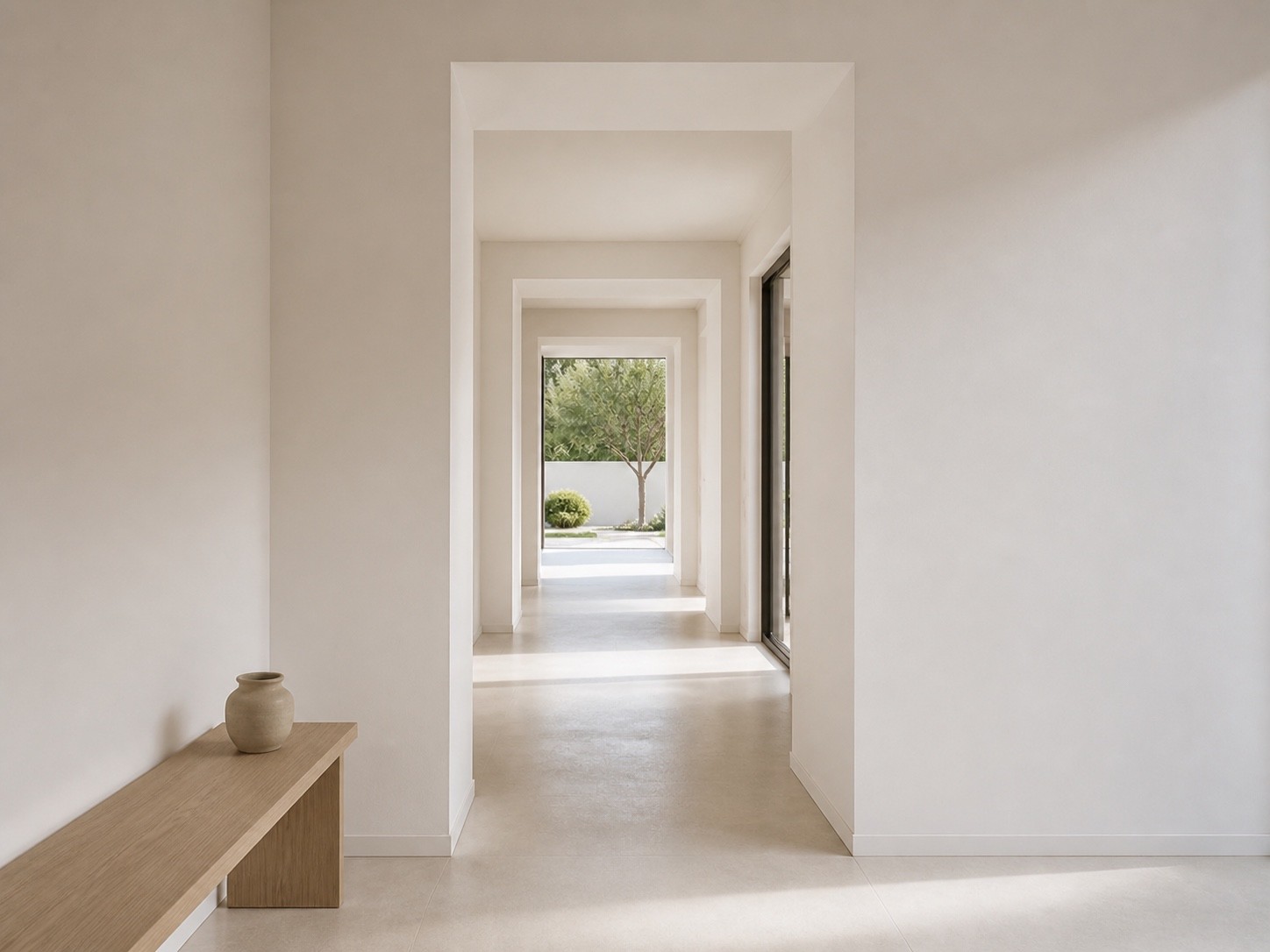
A supporting study for this field note.


